Here’s a fun fact, for journeys under 5km, travelling by bike often proves to be the most efficient mode of travel. Along with the financial and health benefits it provides, it's a bit of a no-brainer.
Sadly, bike theft is a common problem when locking up in public spaces. Thinking about bike security and learning the best techniques will help you minimise the chances of your bike being stolen, and give you some extra peace of mind while you get on with your day.
Choosing the Right Bike Lock
Not all bike locks are created equal. Sold Secure, the premier testing and accrediting house in the UK, test locks and categorise them based on how well they defend an attack.
Starting from Pedal Cycle Bronze, locks can range up to Pedal Cycle Diamond. If a lock surpasses these tests, it will then be rated Powered Cycle Gold or Diamond. Sold Secure locks are often required by insurers if you are taking out a policy.
Common types of bike locks include:
D-Locks (U-Locks)
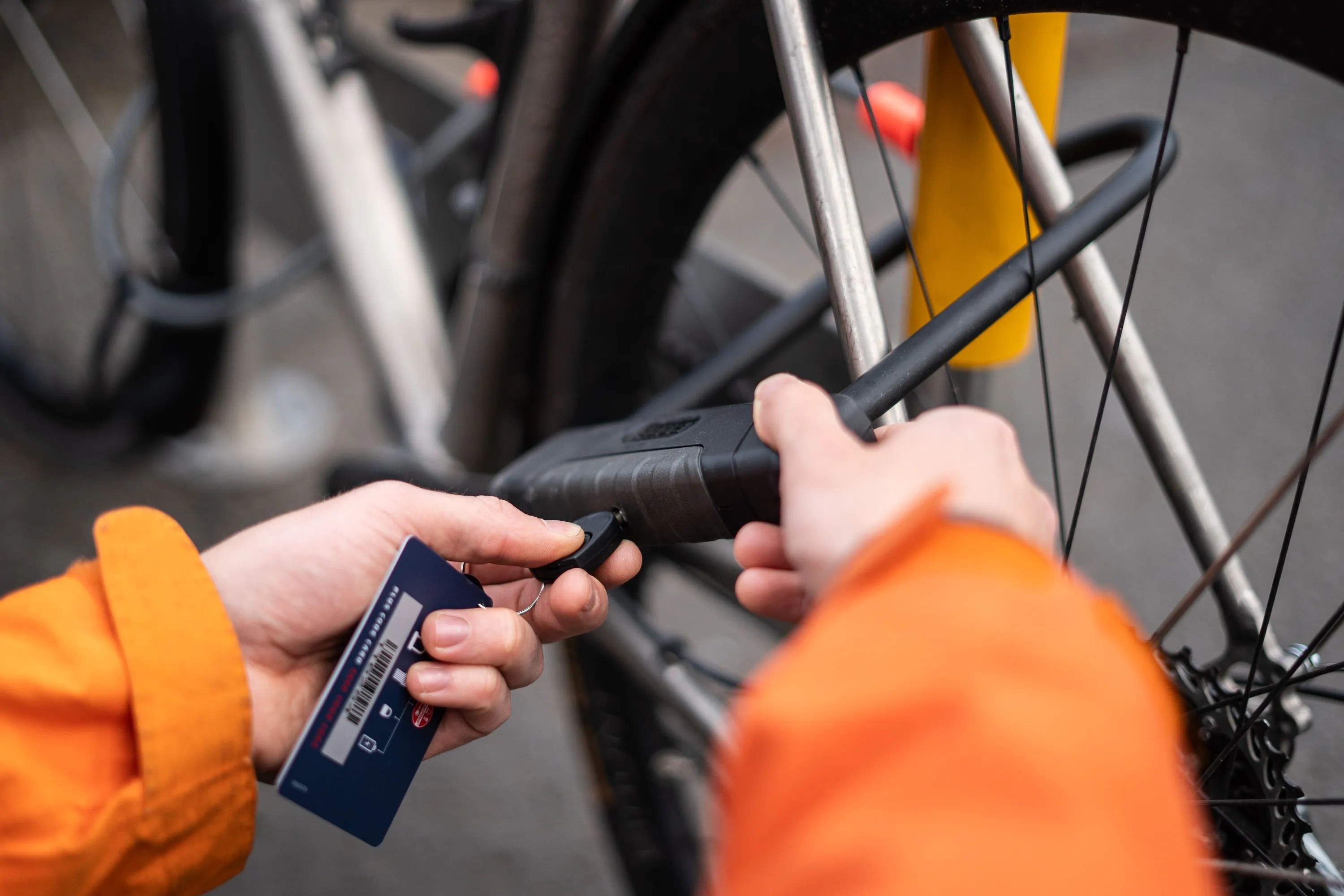
D-locks are among the most secure options available. Their rigid construction makes them highly resistant to cutting and leverage attacks. Many cyclists choose a Sold Secure Gold or Diamond-rated D-lock for everyday use.
Chain Locks
Heavy-duty chain locks provide excellent security and flexibility when locking to larger objects. While they can be heavier to carry, high-quality chains offer strong resistance against theft.
Folding Locks
Folding locks provide a balance between security and portability. They are compact, convenient to transport, and offer more flexibility than traditional D-locks.
Cable Locks
Cable locks are lightweight and useful as a secondary security measure. However, due to being easier to cut than other lock types, you should not use these as your primary lock for securing your bike.
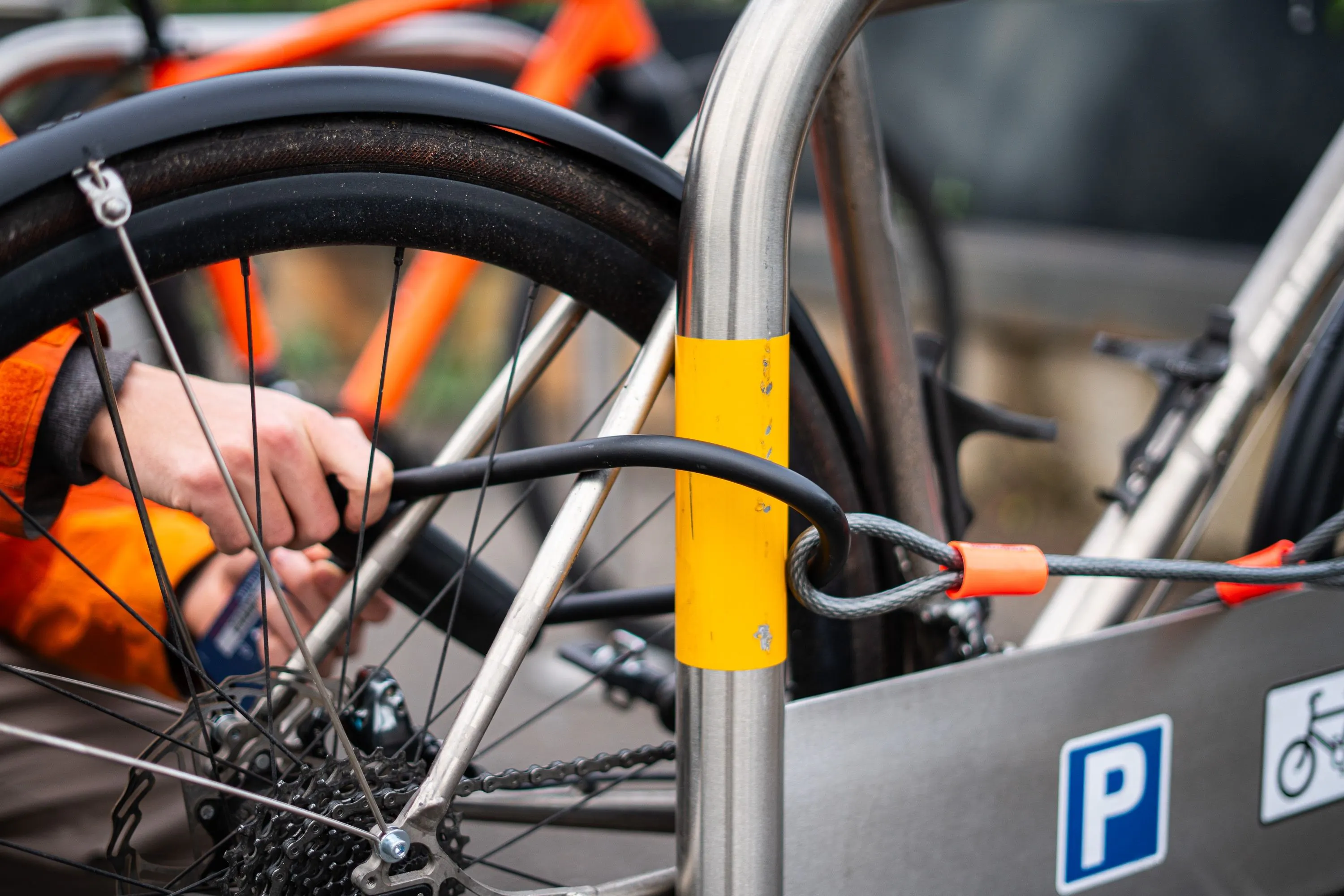
For ultimate peace of mind, we recommend you use a Sold Secure Powered Cycle Diamond accredited D lock and cable combination.
How to Lock Your Bike Correctly
Even locks with the highest security ratings will be ineffective if they are used incorrectly. Use the following points to make sure you're locking your bike up properly:
Check what you are locking to.
Before starting to lock up, ensure that whatever you are locking to is secure. This could mean checking a Sheffield stand is properly bolted to the ground, or a street feature is intact and has no potential weaknesses.Secure the frame and rear wheel first.
Position your bike next to a fixed and immovable locking point. Use your primary D-lock or chain lock to secure the frame and rear wheel to the locking point. Your frame is the most valuable component of your bicycle, making it the priority when locking.Secure the front wheel.
Use a cable to loop through the front wheel and connect it to the primary lock. This helps prevent opportunistic theft of the wheel. Alternatively, you can use a second lock for the front wheel to further decrease the chance of theft.Keep locks elevated.
Position locks off the ground where possible. This makes it more difficult for thieves to use tools effectively.Reduce empty space within the lock.
A snug fit leaves less room for leverage tools and can make attacks more challenging.
Additional Security Tips
Always lock your bike to designated cycle parking facilities whenever available.
Choose well-lit, busy locations with regular pedestrian activity.
Be wary of stickers or tape on locking infrastructure as these can be used to conceal pre-cut stands that thieves revisit continuously to steal bicycles.
Remove accessories such as lights, GPS devices, and bags when leaving your bike unattended.
Register your bicycle with a recognised bike registration scheme and record the frame number.
If possible, use two different types of lock, as this can require thieves to carry multiple tools.
Avoid leaving your bike in the same location for extended periods.
Cycling provides health and financial benefits to you, your community, and the environment. We want everyone to experience these benefits which means knowing how to protect your beloved bike.
By investing in a high-quality Sold Secure accredited lock, following correct locking techniques, and adopting a few additional security measures, you can reduce the likelihood of theft, and enjoy greater confidence when parking you bike in public spaces.