
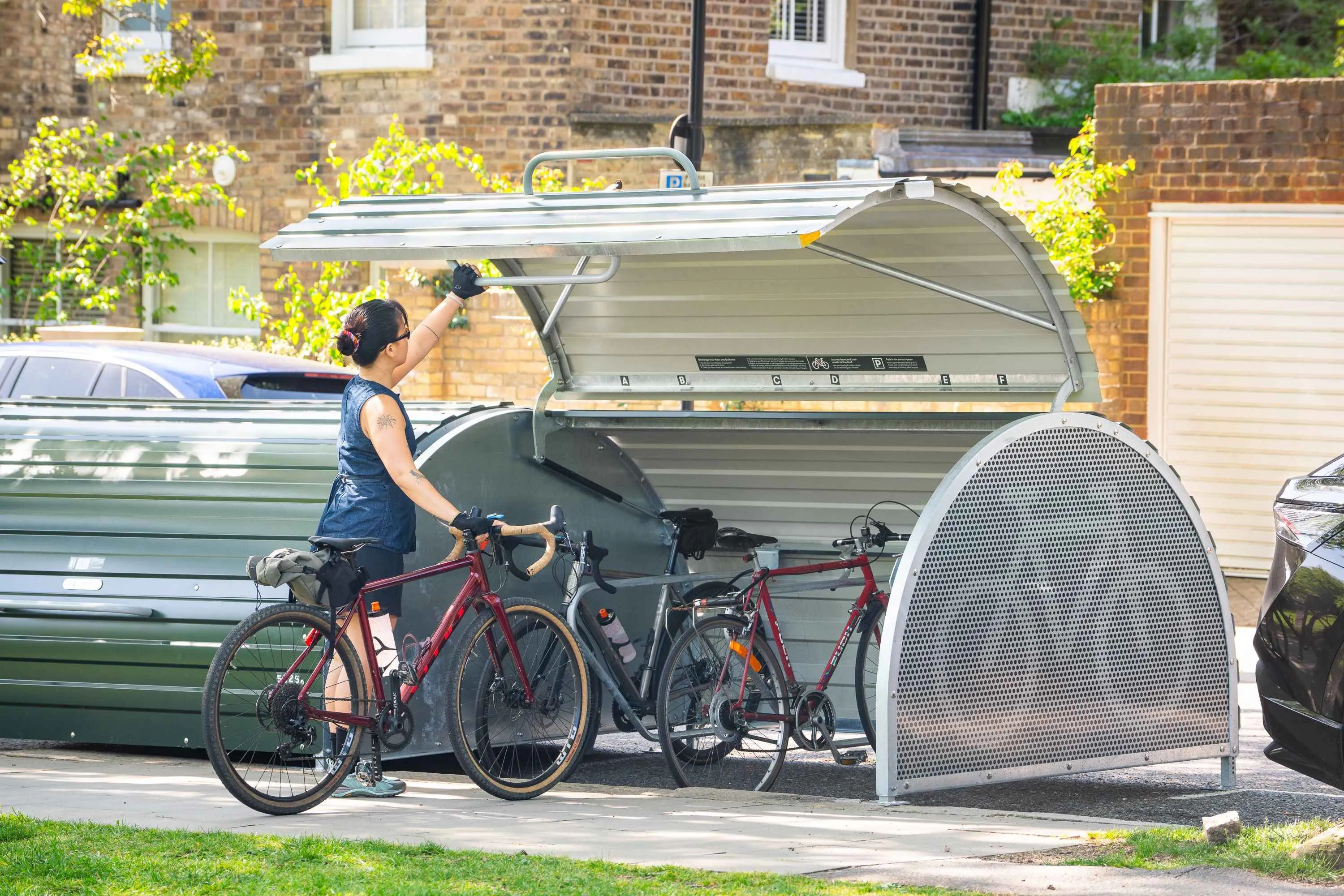
We love the Summer because it means we can spend as much time as possible outdoors cycling, but extended periods of extreme temperatures can have side effects for your Bikehangar.
Due to the heat, the door may become hot to the touch and difficult to open and close.
What’s happening
The weight of the door is supported by two gas struts. In normal temperatures, the struts lift the door as it opens and hold it open while you load your bike. During the extreme temperatures experienced in a heatwave, the gas inside the struts heats up, increasing the pressure and the pushing force. This might cause the lock to feel stiffer as you turn the key and the door to open faster or feel heavier as you pull it down to close it.
What to do
If you need to access your Bikehangar on a hot day, we recommend doing a tap test on the handle, locking mechanism, and door to make sure the temperature is manageable. When it comes to unlocking your Bikehangar, find the guide below that matches your lock style:
Unlocking:
Bikehangars with keys:
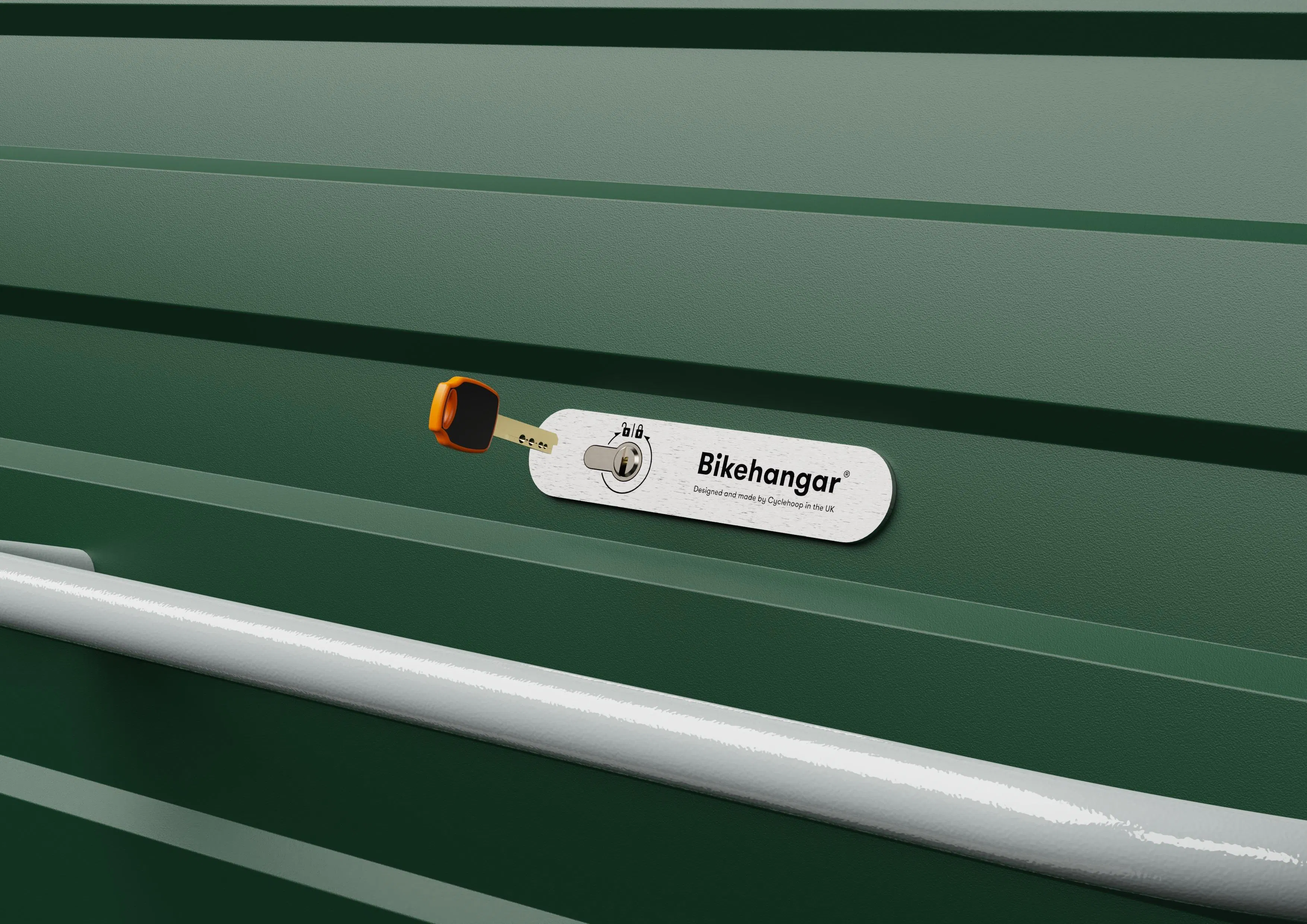
Insert your key and push down on the grey handle as you turn the key, you may need to push down harder than usual. Place your knee, or sit, on the grey handle and push down to apply extra pressure.
Once you’ve turned the key a full 360 degrees clockwise to unlock it, remove the key from the lock.
Release the extra pressure by removing your knee, or standing up, and lift the grey handle on the outside of the door, being cautious that it may rise quicker than usual.
Push the inner handle up to ensure the door is fully opened.
If you’re locking your bike to the racking, make sure you park in your assigned space which is written on your key tag.
Bikehangars using the app:
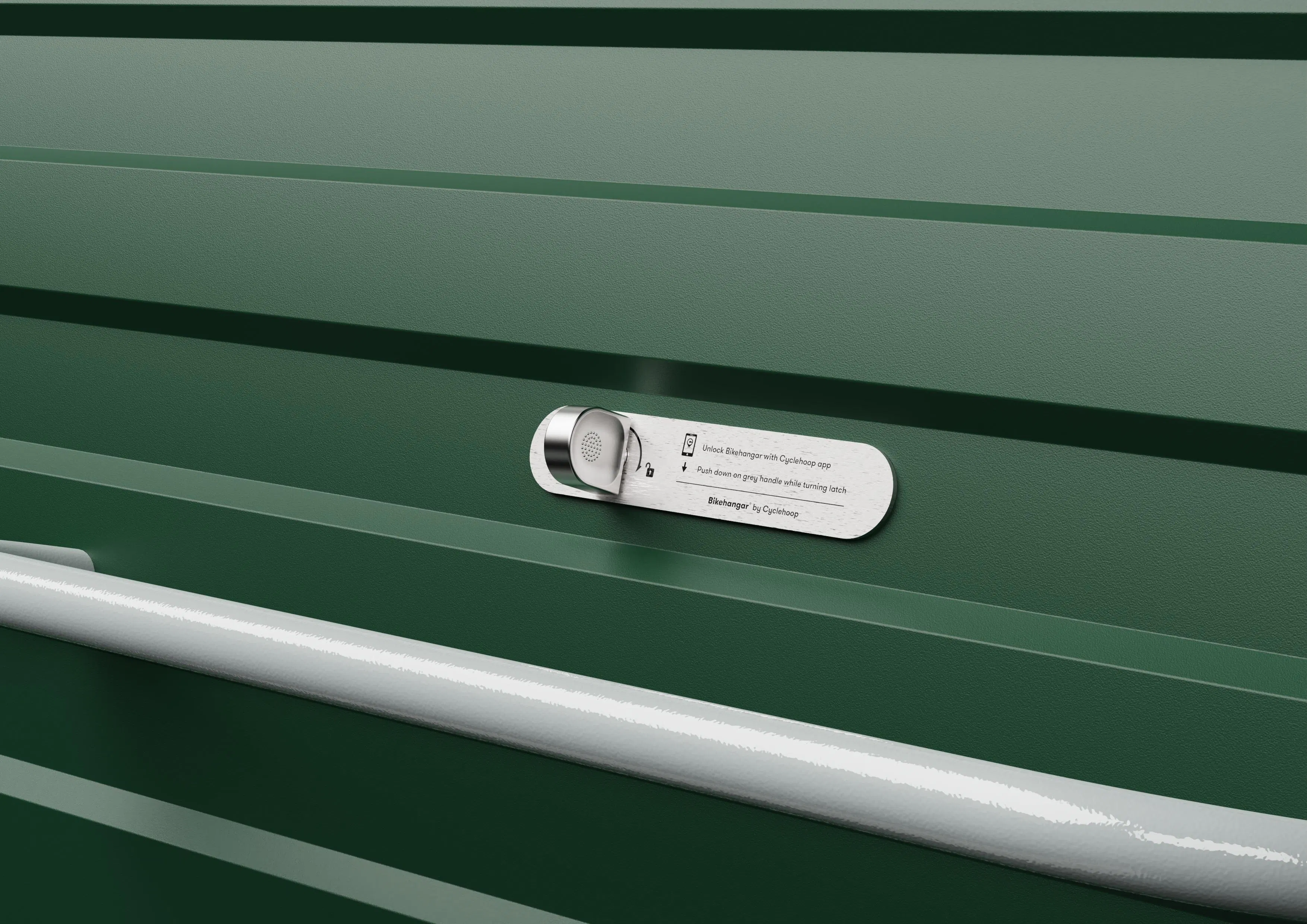
Using the Hooplr app (formerly called “Cyclehoop”), unlock your Bikehangar.
Place your knee, or sit, on the grey handle and push down to apply extra pressure, turn the lock 90 degrees clockwise to unlock the door.
Release the extra pressure by removing your knee, or standing up, and lift the grey handle on the outside of the door, being cautious that it may rise quicker than usual.
Push the inner handle up to ensure the door is fully opened.
If you’re locking your bike to the racking, make sure you park in your assigned space which is written on your key tag.
Bikehangars with levers:
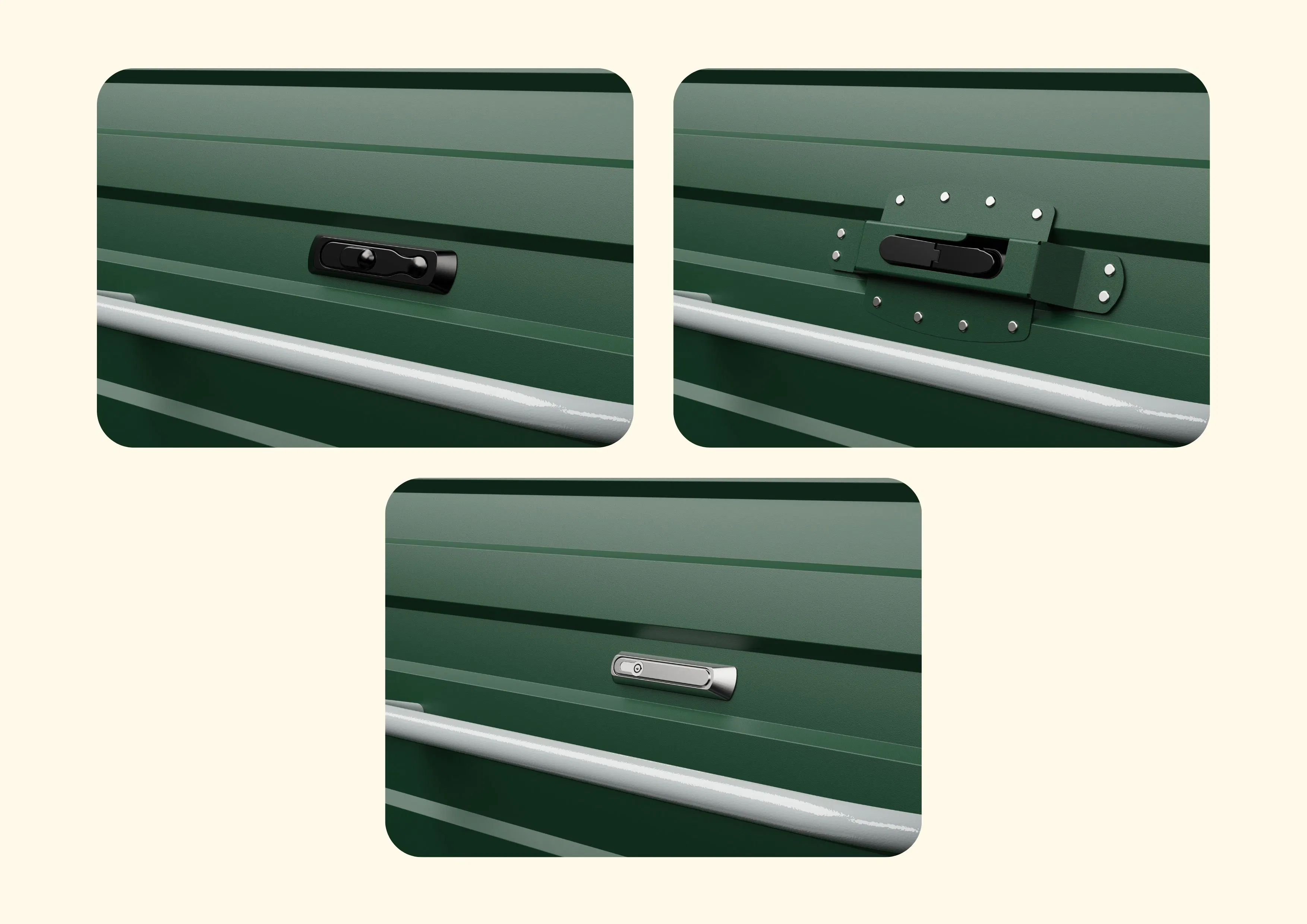
If the lock has a cover, lift or slide it to reveal the lock.
Insert the key and turn it to release the lever, remove the key from the lock.
Place your knee, or sit, on the grey handle to apply extra pressure, push down and turn the lever clockwise to release the lock.
Release the extra pressure by removing your knee, or standing up, and lift the grey handle on the outside of the door, being cautious that it may rise quicker than usual.
Push the inner handle up to ensure the door is fully opened.
If you’re locking your bike to the racking, make sure you park in your assigned space which is written on your key tag.
Locking:
Bikehangars with keys:
From the open-door position, pull down on the internal grey handle to close the door. This action may require more effort than normal due to the increased pressure of the gas struts.
Once closed, put extra weight on the grey handle, either by sitting or pushing on it with your knee.
Whilst still applying extra pressure to the grey handle, place the key in the lock and turn it 360 degrees anticlockwise, removing the key once it is in a vertical position.
Pull up on the grey handle to check it has locked.
Bikehangars using the app:
From the open-door position, pull down on the internal grey handle to close the door. This action may require more effort than normal due to the increased pressure of the gas struts.
Once closed, put extra weight on the grey handle, either by sitting or pushing on it with your knee.
Whilst still applying extra pressure to the grey handle, turn the lock 90 degrees anticlockwise to lock the door.
Pull up on the grey handle to check it has locked.
Bikehangars with levers:
From the open-door position, pull down on the internal grey handle to close the door. This action may require more effort than normal due to the increased pressure of the gas struts.
Check that the lever is in the open position.
Once closed, put extra weight on the grey handle, either by sitting or pushing on it with your knee.
Whilst still applying extra pressure to the grey handle, turn the lever anticlockwise so it is in the horizontal position.
Pull up on the grey handle to check it has locked.
Push the lever firmly into the lock until it clicks into place. Flip or slide the lock lever back into place.
We hope this guide helps you access your Bikehangar. If you have any questions, please contact us to talk to our friendly customer service team.
Happy Cycling!